Home is Where the Heart is: a ceremony to say goodbye to an apartment
When a physical space becomes the keeper of collective memories, saying goodbye to it calls for a ritual. This farewell ceremony marks the end of an era — a lifetime in an apartment that was home to everyone — and the beginning of a new awareness that shared memories are more important than four walls.
A place, a community, a story
There is a kind of loss that never makes it into the obituaries, that is never announced on a notice board, that has no precise name in the liturgy of life. And yet it is real, profound, and deserves to be celebrated. It is the loss of a place — those four walls that, over time, have ceased to be mere brick and mortar and become something alive: a vessel of stories, laughter, tears, late-night conversations, the smell of cooking, piano music, celebrations and silences.
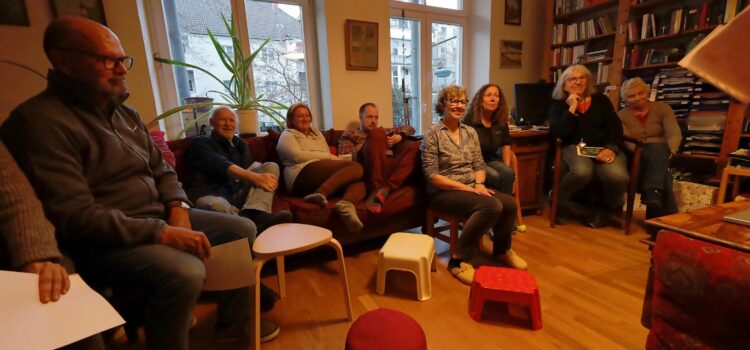
This is exactly what brought a group of friends from different corners of the world together on a late-March afternoon in Cologne, Germany, to say farewell to an apartment after a lifetime together.
A space, many rooms, that for forty-four years had sheltered their lives, or at least significant segments of them. A place where the door was always open, where you could arrive and stay for a day or a year, where the large kitchen walls were lined with photographs of all of them. Not just any home: a point of reference, a safe harbour, a place of friendship in the fullest and warmest sense of the word.
The task of creating and officiating this unusual, deeply human farewell ceremony was entrusted to a professional celebrant, who understands the power of a secular ritual, knows how to structure a rite of passage, and knows that a ceremony like this should be conducted with care and sensitivity.
A farewell ritual: why should we celebrate a place?
Farewell ceremonies for a house or an apartment are still rare in the landscape of celebrant-led ceremonies, yet they respond to a real and universal need. When we leave a home that has marked our lives, we feel something resembling grief. It is not sentimental nostalgia: it is the recognition that that place was part of our identity. Celebrating it means honouring that bond, transforming loss into gratitude, and separation into continuity.
“The miracle of a house is not that it shelters and warms us, nor that we own its walls. It lies, rather, in the fact that it has deposited in us, over time, reserves of sweetness and intimacy.”
Antoine de Saint-Exupéry
This quote was used to open the ceremony, and it would be hard to find a more precise distillation of what that home represented for those who lived in it, and for all those who found in it a second (or third) safe harbour.
“We are not here to leave a house, but to take our leave of a part of ourselves that was formed within these walls — and to welcome the new part of ourselves that will take shape somewhere else.”
from the ceremony
A subtle but powerful distinction, which defines the heart of the ceremony: it is not an ending, but a transformation and a possibility of new beginnings. The ceremony represents this journey and guides its participants to consider this transition not so much as an ending but as a continuation of the same lives elsewhere and in new forms.
photo credits: Frank Schwoebel
A moving monologue from the apartment’s point of view
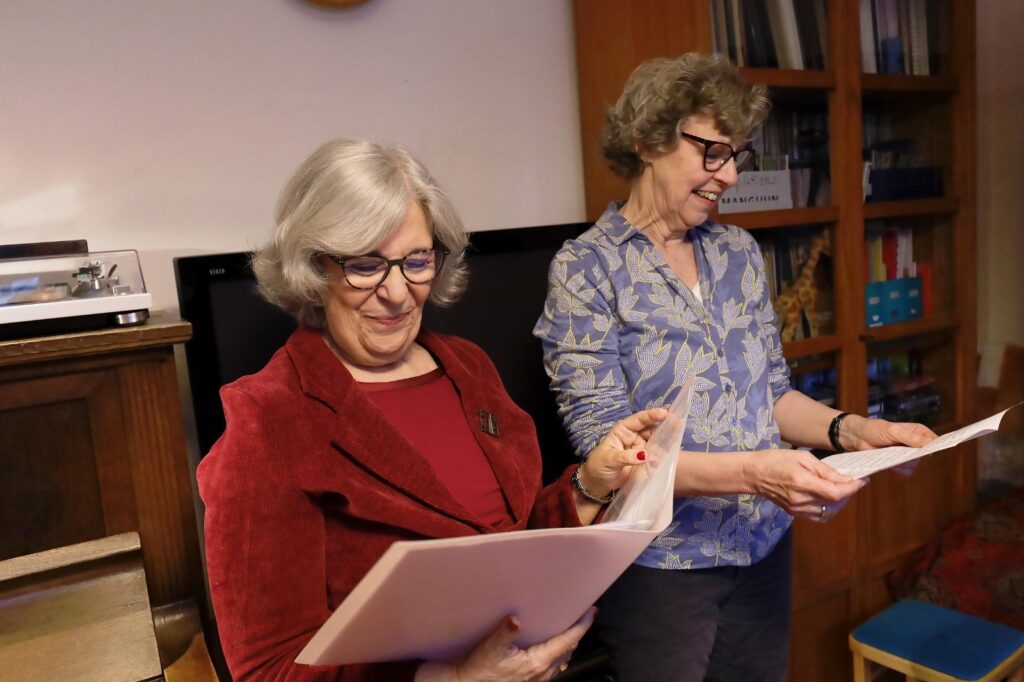
One of the most powerful moments of the ceremony is, without doubt, the apartment’s “life story”: written as a monologue, the home becomes the narrator. The ceremony script is both poetic and ironic, as the walls of the apartment recount and remember forty-four years of life together, with love, wonder, a touch of regret and a great deal of humour.
“I have learned to recognise you: by the way you come in, by your voices, by your laughter — and yes, by how you slam the door,” says the house. “You entrusted me with quite a demanding task: to be the keeper of your memories. That is no small thing. And it has not always been easy to witness your joys and your sorrows, your beginnings and your goodbyes.”
from the ceremony
The house remembers Christmases with singing — “sometimes, let’s say… off-key” — the patter of children’s feet rushing out to watch the carnival parade, New Year’s Eves on the Rhine with fireworks and dishes left in the sink as everyone ran out into the cold. It remembers the sound of a piano on a rainy evening, philosophical discussions in the kitchen among university students trying to understand what the world would become. It remembers tears and laughter, languages — many different ones — because it was a home where the world found refuge.
“I would not trade a single day with you for ten quiet years with boring people,” concludes the house in its monologue.
from the ceremony
An international community: memories from every corner of the world
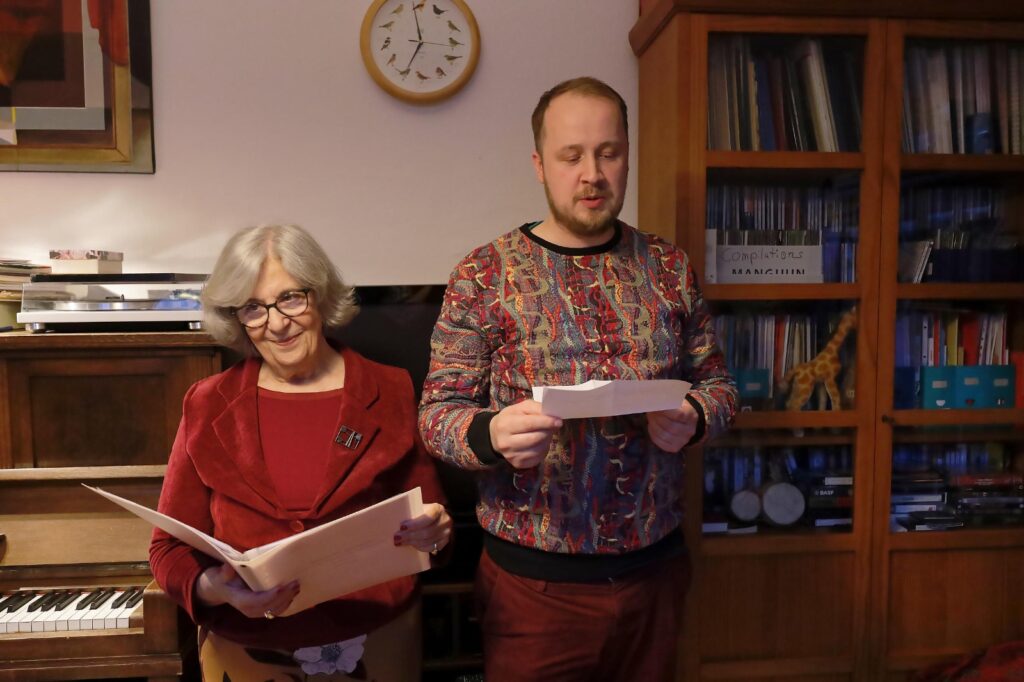
The ceremony reflects how the apartment was not only a gathering place for a group of friends, but also an international crossroads. There were moving and amusing contributions from guests: many present in person, many more who, unable to attend, sent their words from Rome, from London, from Melbourne, from Mainz and other German cities.
They remembered their university days; what the kitchen used to look like; late-night debates on religion, politics, philosophy; the intellectual energy of a generation finding itself — a group of young friends who, around that kitchen table, sharpened their minds and tried to understand who and what they would become. They remembered births, evenings of music, the May sunshine in the inner courtyard, and the hilarious story of a football game invented by adults and children alike, played in the apartment’s remarkably long corridor.
The closing ritual: a memory box
“Memory is the only paradise from which we cannot be expelled.”
Jean Paul
The ceremony closes with a simple but potent symbolic moment: stories brought by friends, and sent from afar and read aloud during the ceremony, are gathered into a box and handed to the hosts. It will remain as a collective memory — an object that holds what the walls can no longer hold, an archive of friendship.
The final reflection is that the very same memories that bring a little sadness today will soon bring smiles and laughter, as everyone realizes and appreciates what they have shared. A farewell that opens the door to a next chapter; with the certainty that no distance — geographical or temporal — can dissolve the deep bonds that unite the people who have walked this rite of passage together.
photo credits:Frank Schwoebel
Why places deserve a proper goodbye
The Cologne ceremony reminds us of something important: rituals exist for the great events of life — weddings, births, deaths — but they are also needed every time life asks us to cross a threshold. And leaving a home that has welcomed and held us, in the deepest sense of that word, is certainly one of those transitions.
As celebrants, our task is to give shape to these rites of passage. To find the words, to build the gestures, to create a celebratory space where a group of people can be together, feel the loss, but come out feeling they have preserved what is most important: the shared memories.
If you too are facing a separation — from a place, from an era, from a phase of life — and feel it deserves something more than a removal van, write to us.
We are ready to accompany you, and to build together the right ceremony for you


 English (UK)
  Italiano